What Makes Slate Distinct as a Flooring Material
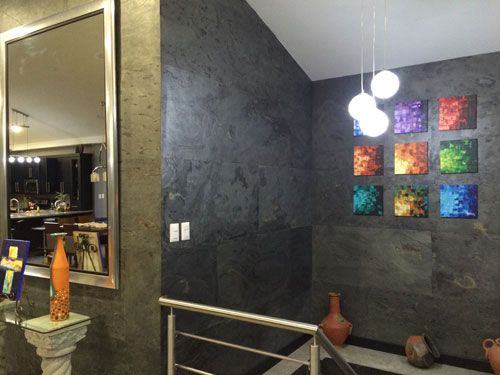
Slate is a fine-grained metamorphic rock that splits naturally along flat planes — a property called foliation. This is why slate tiles can be produced with a cleft (natural split) surface that no engineered material fully replicates. The colour range in commercial slate spans from dark charcoal and blue-grey through green, burgundy, and rust, depending on mineral content and origin.
Canadian tile suppliers typically source slate from several regions: India (particularly Rajasthan and Andhra Pradesh), Brazil, and occasionally domestic sources in British Columbia and Nova Scotia, where small-scale quarrying still occurs. Indian slate dominates the mid-range market in Canadian renovation supply chains due to consistent sizing and competitive landed cost.
Finish Types and Their Practical Differences
Cleft Finish
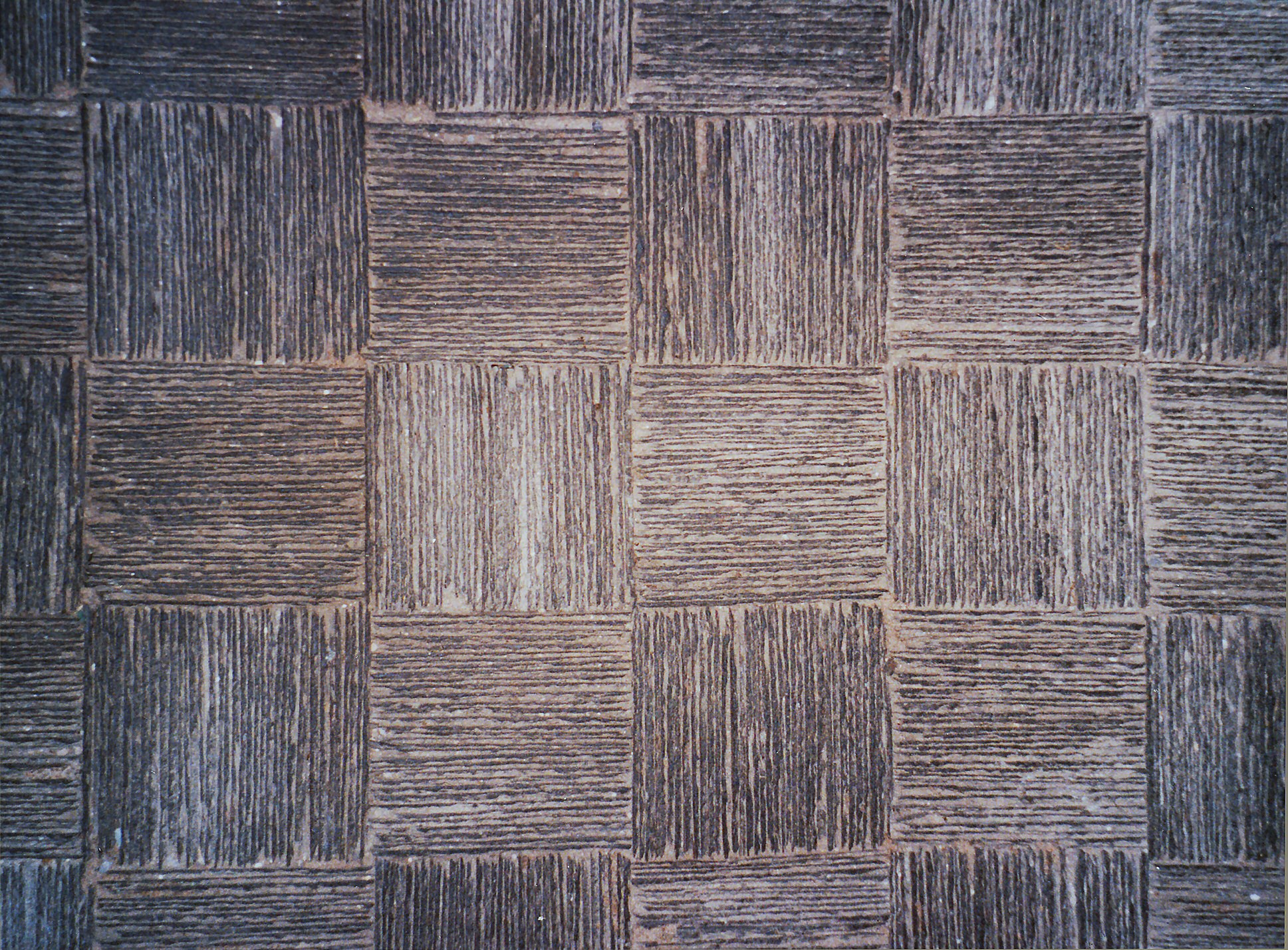
Cleft slate tiles have the natural split surface left intact. The texture is irregular — slightly uneven across a single tile and variable from tile to tile. This finish offers inherent slip resistance, making it practical for entryways, mudrooms, and covered outdoor transitions. The trade-off is that the surface traps dirt in its crevices more readily than a smooth tile would, which matters in high-traffic areas that see boots and salt tracked in from Canadian winters.
Cleft slate is frequently chosen for basement stairs and lower-level mudrooms in Ontario and British Columbia specifically because the texture provides traction when wet — a relevant consideration in climates with significant precipitation and snow melt.
Honed Finish
Honed slate has been ground flat and smooth but not polished to a reflective sheen. The surface is more even than cleft, easier to clean, but less slip-resistant when wet. Honed slate works well in interior living areas and hallways where visual consistency matters more than maximum traction. The grinding process also reveals a more uniform colour across each tile.
Gauged Tiles
Gauged slate tiles have been calibrated to a uniform thickness on the back side, even if the top surface remains cleft. This makes installation easier because the tile setter doesn't need to adjust mortar depth as much to compensate for thickness variation. Most commercial slate sold through Canadian tile retailers is gauged, though the degree of calibration varies by supplier.

Slab Thickness and Subfloor Requirements
Standard slate floor tiles in the Canadian retail market range from 8 mm to 12 mm thick for gauged products. Thicker calibrated tiles are available through stone yards and specialty importers. The subfloor must be rigid enough that it doesn't flex under load — movement at the subfloor level is one of the main causes of cracked grout and, eventually, cracked tiles.
On wood-frame floors, which are common in Canadian residential construction, the standard approach involves a cement board or uncoupling membrane layer between the plywood and the tile. Both methods reduce the transmission of structural movement to the tile surface. The cement board option adds weight that needs to be factored into the structural load calculation for older homes.
Grout Width and Joint Treatment
Cleft slate tiles have irregular edges, which means the joint width varies slightly even when tiles are carefully set. Most installation guides for cleft slate recommend a minimum 6 mm grout joint to accommodate this variation without creating visually awkward gaps. Honed and gauged tiles can work with narrower 3–4 mm joints.
Grout colour selection has a significant effect on the final appearance. Dark grout reads as a continuous grid over light-coloured slate; mid-tone grout softens the transition between tiles. Unsanded grout is used for joints under 3 mm; sanded grout is standard for wider joints in slate installations.
Sealing Requirements
Slate is a porous stone and absorbs liquids if left unsealed. The appropriate sealant depends on the desired finish. Penetrating sealers (also called impregnating sealers) are absorbed into the stone and provide protection without changing the surface appearance significantly — they are the most common choice for entryways and kitchens. Topical sealers sit on the surface and can enhance colour depth, but they wear unevenly under foot traffic and require periodic reapplication.
In Canadian basements where moisture can migrate upward through a concrete slab, a crystalline waterproofing treatment on the slab itself is preferable to relying solely on a surface sealer on the tile. This is particularly relevant in older homes in cities like Hamilton, Windsor, or Winnipeg where basement moisture management is a recurring concern.
Freeze-Thaw Considerations
Slate installed in areas subject to freeze-thaw cycles — covered porches, sunrooms without consistent heating, or transition spaces between interior and exterior — faces a specific risk: water absorbed into the stone can expand as it freezes and cause spalling or delamination at the cleft surface. This is less a concern for dense, hard slate from certain Indian sources than for softer varieties. Checking the water absorption rate specification on the product data sheet before selecting slate for a borderline interior-exterior location is worth doing.