What Is Stone Veneer?
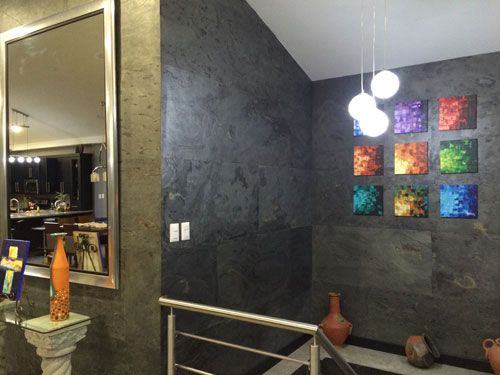
Stone veneer refers to thin slices or panels of natural or engineered stone material applied over an existing structural surface. Unlike full-thickness stone, veneer products are designed to add visual texture without the weight load of solid masonry. In residential interiors, they appear most often on accent walls, fireplace surrounds, kitchen islands, and entryway columns.
There are two distinct categories. Rigid stone veneer panels consist of real stone — commonly slate, quartzite, limestone, or granite — cut to a uniform thickness, typically between 10 mm and 25 mm. Flexible stone veneer is a newer product type that bonds thin stone slices to a fibreglass or polyester backing, allowing the panel to curve around corners and irregular surfaces.
Product Types Available in Canada
Rigid Natural Stone Panels
Rigid panels are sourced from quarries in multiple countries and distributed through stone yards and tile retailers across Canada. The weight per square metre varies significantly depending on the stone type and panel thickness. Slate and quartzite panels in the 12–18 mm range weigh roughly 25–35 kg per square metre — a load that requires proper wall substrate and anchor points.
Canadian suppliers including Stone Tile International (Toronto) and Olympia Tile carry rigid panel lines, though product availability shifts seasonally with import cycles. Prices at the retail level vary by stone type, with budget options in slate running lower per square metre than premium quartzite or travertine.
Flexible Stone Veneer Sheets
Flexible veneer sheets typically measure around 600 × 1200 mm per panel, with a total thickness under 3 mm including the backing. The stone layer is real — usually slate, mica, or quartzite — but the flexible substrate means installation requires different adhesives and techniques than rigid panels.
Flexible veneer sheets can wrap corners and curved surfaces where rigid panels would require mitring or dedicated corner pieces. This makes them a practical option for irregular fireplace shapes or columns.

Surface Preparation
The wall substrate must be clean, flat, and structurally sound before veneer installation begins. On drywall, a skim coat of plaster or a layer of cement board is commonly recommended for heavier rigid panels. Painted surfaces generally need to be sanded or primed with a bonding agent to ensure adhesive grip.
In Canadian construction, the moisture content of the wall assembly deserves attention. Exterior-facing walls, especially in climates like those in Alberta or Manitoba where temperature swings are pronounced, can develop condensation in wall cavities. Any moisture intrusion behind stone veneer risks adhesive failure and, over time, efflorescence — the white mineral deposits that form when water migrates through stone and evaporates at the surface.
Adhesive Selection
Flexible veneer sheets are typically bonded with a contact cement or modified acrylic adhesive. Rigid panels over 15 mm thick are usually set with a polymer-modified thinset mortar, following the same method used for large-format ceramic tiles. For installations above fireplaces where the wall surface reaches elevated temperatures, a high-temperature-rated adhesive is necessary.
Canada's wide climate range means adhesives should be rated for the temperature conditions present during application. Most product manufacturers specify a minimum application temperature — typically 10°C — and this creates scheduling constraints for renovation projects in unheated spaces during winter months.
Installation Process
A typical stone veneer installation on a single accent wall follows a sequential process. Layout lines are marked on the wall to keep courses level. Adhesive is spread with a notched trowel (for thinset) or applied directly to the panel back (for contact cement systems). Panels are pressed firmly into position and spacers maintain consistent joint width if grout lines are planned.
Not all stone veneer installations use grout. Many designers prefer a dry-stack appearance where panels butt tightly together with minimal visible joints. In this case, edge preparation and careful cutting become more important to achieve clean, consistent lines.
Cutting Stone Veneer
Rigid panels are cut with a wet tile saw fitted with a diamond blade. Flexible veneer sheets can be cut with a utility knife or scissors along the backing layer, though the stone surface itself may need scoring. Safety equipment — at minimum a dust mask rated for silica and eye protection — is essential when cutting any stone product.
Long-Term Upkeep
Natural stone veneer benefits from periodic sealing, particularly in kitchens and bathrooms where moisture and oil exposure is routine. The appropriate sealer type depends on the stone: porous stones like slate and limestone absorb impregnating sealers well, while denser quartzite may not require sealing at the same frequency.
Routine cleaning with pH-neutral stone cleaners is preferable to general household cleaners, many of which contain acids or alkalis that can etch or discolour stone surfaces over time. Grout lines, if present, may need re-grouting after several years in high-traffic areas.